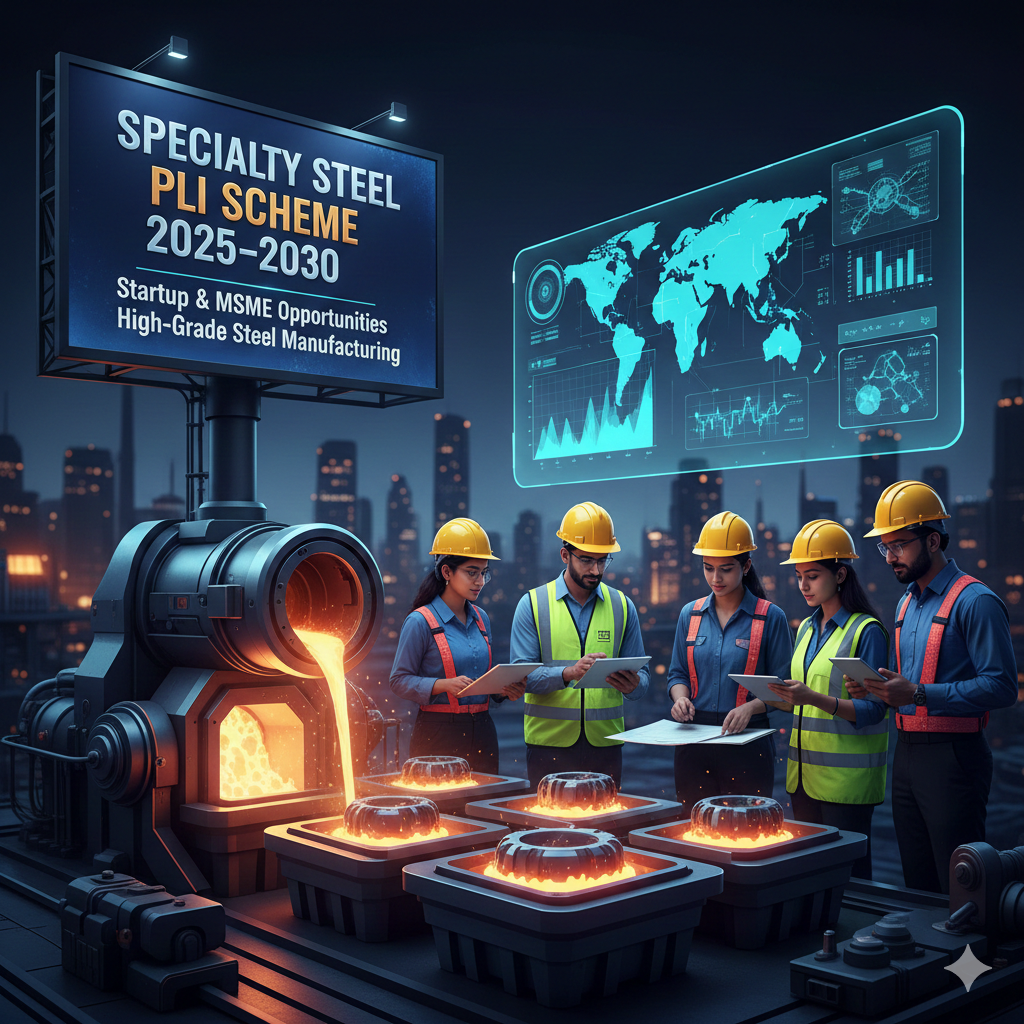

How Startups Can Win Big Under India’s ₹6,322 Cr Specialty Steel PLI Scheme (2025–2030)
Introduction to India’s Transition from Commodity Steel to High-Value Steel
India is a major player in the production of steel. It churns out a massive quantity every year. There’s a problem We are still importing high-grade steel from other countries. It’s like having a state-of-the-art kitchen in a home.
Why order food from outside? For this purpose comes the PLI Scheme For Specialty Steel with a fund allocation of ₹6,322 crore. This has been launched by the government. It’s not a project meant only for large enterprises.
From the latest report by the Ministry of Steel for the year 2024-25, the facts are thus:
- Requirement of finished steel (Apr-Dec 2024): 111.49 MT, an increase of
- Finished steel imports: 7.42 MT, increase of 22.7% (we must deal with this)
- Crude steel production: 112.01 MT (healthy output)
- Iron ore production (FY 2023-24): 275 MT (a record
- CPSE steel CAPEX: ₹10,139 crore (Heavy investments
- Specialty Steel: remains very import reliant
So, if you’re a entrepreneurial mind with the vision for a more industrial future, the window is 2025–2030. It’s like the world is pushing you, encouraging you, “Hey, the margins are so good, the government
Read More: Top 20 Steel Products Manufacturing Business Ideas
What is the Specialty Steel PLI Scheme?
(Founder-Friendly Summary)
Let’s get back to realities. This is what the PLI plan is all about: it’s a means for the government to say, “If you produce more of this specialized steel, we will reward you.” The goal is to encourage the production of specialized steel, which is stronger, smarter, or more specialized, that we are currently not producing and are relying on imports.
Types of Covered Steel
There are five important types:
- Coated and Plated Steel – (protective coatings for added durability)
- High-Strength Steel – (for heavy duty applications)
- Special Alloy Steel – (specifications blended to satisfy special requirements)
- Electrical Steel – (CRGO/CRNO – for power
- Wear-resistant, corrosion-resistant, and heat-resistant steel – (made to withstand demanding environments)
Functioning of Incentive System
True: the more you produce, the better the incentives. The strength rises along with increased production, as you are also motivated to improve technology, quality, and scalability. Based on what I noticed, new ventures can be successful with the incubated and motivated approach, where you start small and grow.
Why This Scheme Is a Game Changer For MSMEs And Startups
“This isn’t just talk of policy; it’s a lifeline for the smaller players.” Why it matters:
Key benefits include:
- It decreases imports, hence beneficial to the economy
- Sparks require demand in other fields, and this causes a ripple effect
- Funds R&D activities, which aid in the development of metal industries
- Promotes clustering where companies develop together.
- It favors export, promoting India in global politics
- Reduced risk for beginners – Easier to take the plunge
I’ve heard of startups using the same tactics to take an idea from conception through to factory production within the span of a year. That seems doable, right?
Read Our Book: Click Here
India’s Import Dependence: The Real Opportunity
Imports grew 22.7% in 2024, particularly in the following specialized steels of the hot sectors:
- Cars and EVs (Lighter, safer vehicles)
- Power transformers (> keeping the lights on)
- Renewable energy sources (solar and wind)
- Defence and aerospace (national security issues)
- Precision Engineering (High Technology Tooling)
India’s steel market revolves around the basics: TMT bars, Rebars. But the niche market: that’s the goldmine. High margins, low competition. If you’re new, this is where you can carve out something that matters.

Market Potential: Why Specialty Steel Is a Long-Term Bet
The demand for steel in India is expected to reach approximately 230 MT in 2031, with specialty steel growing faster than basic steel, which is ideal for long-term planning.
Key demand drivers include:
- Automotive and Electric Vehicles steel: 8-10% CAGR; HSLA, AHSS are the Lightweight Champs
- Electrical Steel: The electrical steel segment is one of the leading consumers of
- Coated Steel: infra/solar boom, GI, GL, & PPGI – highly durable & very stylish
- Tool and alloy steel: Engineering growth; Demand held steady
- Stainless Steel: growth of consumption and exports; elite grades for kitchen and other applications
Read More: 10 High-Demand Downstream Steel Product Manufacturing Ideas in India
Top 12 High Potential Specialty Steel Startup Opportunities (2025-2030)
Here are the ideas that fit the PLI demand. Think big. Start lean.
1).High-Strength Low-Alloy (HSLA) steel for Automotive & EVs
2).Electrical Steel (CRGO/CR
3).Coated Steel (GI, GL, PPGI, PP
4).Cold-rolled stainless steel for home appliances and kitchen applications
5).Production of tool and alloy steel (HSS, alloy bars)
6).Defense & armor-grade steel (Strategic Segments)
7).Weathering steel (Corten
8).Corrosion-resistant steel for coastal structures
9).High Nickel And Chromium Alloy Steel
10).Renewable energy steel products (wind towers, solar tracking systems)
11).Precision steel tubing and pipes (ERW/CDW)
12).Manufactured and rolled specialty steel products (shafts, gearings)
“2026-Ready”
| Ready to plan? Consider the starting projects: –
- Specialty steel rolling mill with capacity of 200–500 TPD –
- CRNO/CRGO processing and service center (low capex, high demand) –
- Stainless steel service center – Solar structural assembly and high
- strength coating unit (integrated with green energy sources) –
- Alloy Steel Melting Shop with Vacuum Induction Furnace (TECH-NEXT)
Read Business Plans / Project Profiles : Click Here
Inspiration from India’s Steel Visionaries Learn from the greats:
- Ratan Tata: Tata Steel: Sustainability & Expertise
- Sajjan Jindal (JSW Steel): innovator at the top
- Lakshmi Mittal (ArcelorMittal):
Global Expansion with Green Steel Their stories illustrate that steel isn’t a dull material—it’s about tech and strategy. You can do this.
Role of NPCS in Supporting New Steel Entrepreneurs
At Niir Project Consultancy Services (NPCS), we are the doing partners for you. We turn your thoughts into concrete plans with elaborate DPRs and feasibility reports. Yes, we have assisted entrepreneurs like you in making the right decision whether to proceed or not. Contact us and let us ease the way for you.
Conclusion
The decade of the 2025–2030 period is considered the “This PLI scheme is the call for self-reliance in India.” With the growing needs of the country in terms of increased imports and demand, the incentive offered, and the nature of the product, this is your passport for meaningful business in the specialty steel segment. If you’re now looking to set up an industrial venture, I think this has one of the finest risk vs. reward ratios available out there.